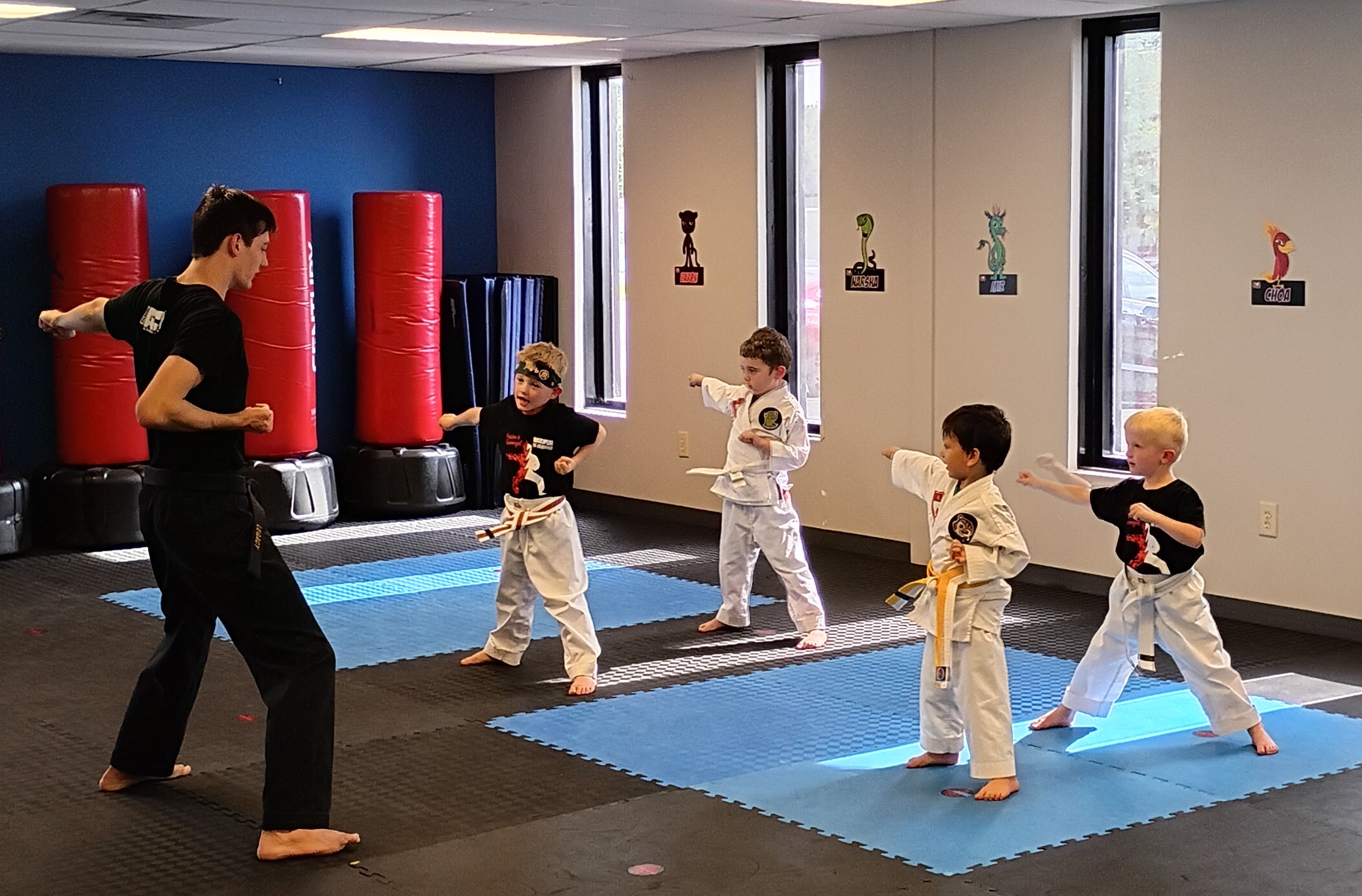
7 Ways Martial Arts Builds Confidence, Fitness, and Real-World Self-Defense
A practical guide for adults, parents, and teens who want to become stronger, safer, more confident, and more prepared for life
Presented by
Pilsung ATA Martial Arts
A Martial Arts-Based Leadership Academy in Greenwood, Indiana
Welcome
Most people do not begin martial arts because they want to become professional fighters.
They begin because they want something deeper.
They want more confidence.
They want better fitness.
They want to feel safer.
They want more discipline.
They want a positive outlet for stress.
They want to know they can handle themselves.
They want their children or teens to become stronger, more focused, and more prepared for life.
They want to become the kind of person who does not panic under pressure.
At Pilsung ATA Martial Arts, we believe martial arts is about much more than kicking and punching.
It is a structured path for developing the body, mind, character, and confidence of each student.
That is why we approach training as a martial arts-based Leadership Academy.
This guide will show you seven ways martial arts can help build confidence, fitness, and real-world self-defense — not through fear, aggression, or intimidation, but through consistent practice, discipline, awareness, and personal growth.
Martial Arts Is Not Just About Fighting
A common misunderstanding is that martial arts is mainly about learning how to fight.
Real martial arts training is different.
Traditional martial arts teaches students how to:
Control their body
Focus their mind
Manage fear
Show respect
Build discipline
Use strength wisely
Avoid unnecessary conflict
Protect themselves when needed
Stay calm under pressure
Develop confidence through earned progress
Self-defense is important, but real self-defense begins before anything physical happens.
It starts with awareness, posture, boundaries, confidence, decision-making, and self-control.
The best self-defense is not just knowing how to strike.
It is knowing how to carry yourself, recognize danger, avoid preventable problems, and respond with calm confidence if action becomes necessary.
Who This Guide Is For
This guide is for you if you are:
An adult who wants to feel stronger, healthier, and more confident
A parent looking for a positive activity that builds real life skills
A teen who wants more confidence, discipline, and self-defense awareness
Someone who feels out of shape and wants a structured starting point
Someone who wants practical self-defense without an aggressive environment
Someone who wants more than a gym workout
Someone who wants personal growth through physical training
You do not need prior experience.
You do not need to be in perfect shape.
You do not need to be flexible.
You do not need to feel confident before you begin.
Martial arts helps you build those qualities over time.
Way 1: Martial Arts Builds Earned Confidence
Confidence is not pretending to be fearless.
Confidence is built when you prove to yourself that you can learn, improve, and handle challenges.
In martial arts, confidence grows through small victories:
Learning your first stance
Completing your first class
Improving a technique
Remembering a form
Earning a stripe
Testing for a new rank
Training through a hard day
Doing something you once thought you could not do
This kind of confidence is earned.
It is not empty praise.
It is not hype.
It is built through effort and progress.
For children and teens, this can help them stand taller, speak more clearly, and believe in themselves.
For adults, it can restore a sense of strength, capability, and personal pride.
For families, it can create a shared language of growth, discipline, and personal victory.
Reflection
Where would more confidence help you or your family most right now?
[ ] School
[ ] Work
[ ] Social situations
[ ] Fitness
[ ] Personal safety
[ ] Stress
[ ] Parenting
[ ] Leadership
[ ] Trying new challenges
Other: ___________________________________________
Way 2: Martial Arts Improves Functional Fitness
Many people think fitness means going to the gym, lifting weights, running on a treadmill, or following a workout plan alone.
Those can be valuable, but martial arts offers something different.
Martial arts builds functional fitness.
That means training the body to move better in real life.
Martial arts can help improve:
Strength
Balance
Coordination
Flexibility
Endurance
Mobility
Body control
Reaction time
Core stability
Explosive movement
Cardiovascular conditioning
Instead of repeating the same exercise in isolation, students train through stances, kicks, blocks, strikes, footwork, forms, partner drills, and controlled movement.
The result is fitness with purpose.
You are not just exercising to burn calories.
You are training your body to become more capable.
That can be especially valuable for adults who feel bored by normal workouts or teens who need a positive physical outlet.
Reflection
What fitness goal matters most right now?
[ ] More energy
[ ] Weight management
[ ] Strength
[ ] Flexibility
[ ] Better balance
[ ] Stress relief
[ ] Coordination
[ ] Improved stamina
[ ] Feeling athletic again
[ ] Better physical confidence
Other: ___________________________________________
Way 3: Martial Arts Teaches Calm Under Pressure
Confidence and self-defense both depend on one important skill:
The ability to stay calm under pressure.
In real life, pressure does not always look like a physical attack.
Pressure can look like:
A difficult conversation
A stressful day at work
A school conflict
A social challenge
A moment of fear
A parenting challenge
A personal setback
A situation where you feel intimidated or overwhelmed
Martial arts gives students a safe place to practice pressure.
Students learn how to breathe, listen, respond, adjust, and keep going.
They learn that discomfort is not failure.
They learn that being nervous does not mean they are weak.
They learn how to stay present when something is challenging.
This matters because real confidence is not built in perfect conditions.
It is built when you practice staying steady in difficult moments.
Reflection
When pressure increases, what do you most want to improve?
[ ] Staying calm
[ ] Speaking clearly
[ ] Thinking before reacting
[ ] Breathing and relaxing
[ ] Making better decisions
[ ] Standing up for myself
[ ] Not shutting down
[ ] Not becoming angry too quickly
[ ] Recovering faster after stress
Other: ___________________________________________
Way 4: Martial Arts Builds Awareness and Boundaries
Real-world self-defense starts before physical contact.
It begins with awareness.
Awareness means paying attention to your surroundings, your instincts, and the behavior of people around you.
Martial arts can help students become more aware of:
How they carry themselves
Where they are standing
Who is around them
When a situation feels wrong
How to create distance
How to use voice and posture
How to leave before a problem grows
How to set boundaries clearly
Boundaries are also part of self-defense.
A confident person learns how to say:
“No.”
“Stop.”
“Back up.”
“I need space.”
“I am leaving.”
“That is not okay.”
For teens, this can help with peer pressure, bullying, social conflict, and personal safety.
For adults, this can help with confidence, assertiveness, and daily awareness.
For parents, this can help children and teens understand that safety is not about fear. It is about wisdom, awareness, and self-respect.
Reflection
Where would better boundaries help most?
[ ] Personal space
[ ] Social pressure
[ ] School or workplace situations
[ ] Saying no
[ ] Avoiding conflict
[ ] Online/social media habits
[ ] Friendships
[ ] Family stress
[ ] Self-confidence
Other: ___________________________________________
Way 5: Martial Arts Develops Discipline and Consistency
Most people do not struggle because they lack goals.
They struggle because they lack consistency.
Martial arts helps students practice consistency in a visible, structured way.
Students learn to show up, bow in, train, listen, practice, improve, and return again.
That repeated process builds discipline.
Discipline does not mean punishment.
Discipline means learning to do what helps you grow, even when you do not feel motivated.
In martial arts, students practice discipline through:
Class attendance
Skill repetition
Rank progression
Goal setting
Respect for instructors
Following class structure
Training through frustration
Practicing at home
Preparing for testing
Supporting classmates
This kind of discipline carries into other areas of life.
Children may become more responsible at home.
Teens may become more focused at school.
Adults may become more consistent with fitness, health, and personal goals.
Martial arts does not just teach discipline as an idea.
It gives students a place to practice it.
Reflection
Where would more discipline or consistency help most right now?
[ ] Fitness
[ ] School
[ ] Work
[ ] Parenting
[ ] Stress management
[ ] Health habits
[ ] Sleep routine
[ ] Confidence
[ ] Personal goals
[ ] Family life
Other: ___________________________________________
Way 6: Martial Arts Builds Responsible Self-Defense Skills
Self-defense is not about becoming aggressive.
It is about becoming prepared.
Responsible self-defense includes:
Awareness
Avoidance
De-escalation
Boundaries
Distance
Voice
Movement
Escape
Physical skills when necessary
Control after the danger has passed
At Pilsung, self-defense is taught with respect and responsibility.
Students learn that strength should be controlled.
They learn that martial arts skills are not for showing off, threatening others, or starting conflict.
They learn that confidence often reduces the need for physical action because confident people tend to carry themselves differently, speak more clearly, and make better decisions under pressure.
Real-world self-defense is not just about what you do with your hands and feet.
It is also about what you do with your mind.
Can you stay aware?
Can you set a boundary?
Can you move away?
Can you protect yourself if needed?
Can you control your reaction?
Can you use good judgment?
That is why martial arts-based self-defense is a leadership skill.
Reflection
What part of self-defense feels most important to you?
[ ] Awareness
[ ] Avoiding danger
[ ] Setting boundaries
[ ] Confidence in public
[ ] Protecting my child or family
[ ] Physical skills
[ ] De-escalation
[ ] Fitness and movement
[ ] Handling fear
Other: ___________________________________________
Way 7: Martial Arts Creates a Growth Environment
One of the most powerful parts of martial arts is the environment.
A good martial arts academy gives students a place to grow around positive instructors, clear expectations, encouraging classmates, and a structured path of progress.
That matters because growth is easier when the environment supports it.
At Pilsung, students are not just taking classes.
They are entering a culture built around:
Respect
Effort
Encouragement
Focus
Discipline
Confidence
Leadership
Personal victory
Positive challenge
Continual improvement
For children and teens, this provides role models and structure.
For adults, it provides accountability and support.
For families, it provides a shared path of growth.
In a world full of distraction, stress, screens, and pressure, martial arts gives students a place to practice becoming stronger from the inside out.
Reflection
What kind of environment would help you or your family grow?
[ ] Encouraging
[ ] Structured
[ ] Challenging
[ ] Family-friendly
[ ] Respectful
[ ] Beginner-friendly
[ ] Goal-oriented
[ ] Fitness-focused
[ ] Leadership-focused
[ ] Self-defense-focused
Other: ___________________________________________
Quick Self-Assessment
Use this short scorecard to identify your strongest reasons for considering martial arts.
For each statement, choose the number that best fits.
0 = Not important right now
1 = Somewhat important
2 = Very important
| Statement | Score |
|---|---|
| I want more confidence. | ___ |
| I want better fitness. | ___ |
| I want practical self-defense awareness. | ___ |
| I want more discipline and consistency. | ___ |
| I want a positive outlet for stress. | ___ |
| I want better focus and mental toughness. | ___ |
| I want a structured, supportive environment. | ___ |
| I want my child or teen to develop leadership skills. | ___ |
| I want to become stronger physically and mentally. | ___ |
| I want to feel more prepared for real life. | ___ |
Total Score: ___ / 20
What Your Score May Mean
0–6: You May Be Exploring
You may be curious about martial arts but not sure whether it is the right fit.
That is okay.
A short introductory experience can help you see whether the training environment, instructors, and class structure feel right.
Best next step:
Ask questions, visit the academy, or schedule a conversation.
7–13: Martial Arts May Be a Strong Fit
You have several reasons to consider martial arts, especially if you are looking for confidence, fitness, stress relief, discipline, or self-defense.
You may benefit from trying a beginner-friendly program and seeing how the training feels in person.
Best next step:
Schedule a Leadership Discovery Program and identify your top goals.
14–20: Martial Arts May Be Exactly What You Are Looking For
You appear to be looking for more than a workout or a casual activity.
You may be looking for a structured path that builds confidence, fitness, discipline, and personal growth.
Martial arts-based leadership training may be a strong fit.
Best next step:
Begin with a Leadership Discovery Program and discuss the best training path for your goals.
How Martial Arts Supports the Whole Person
At Pilsung ATA Martial Arts, we believe strong students are built from the inside out.
Physical training matters.
But physical training alone is not enough.
A student also needs:
Confidence to try
Discipline to continue
Respect to grow
Focus to improve
Courage to face challenges
Humility to receive coaching
Wisdom to avoid conflict
Strength to protect themselves if needed
Leadership to make good choices
This is why we describe Pilsung as a martial arts-based Leadership Academy.
We train martial arts skills, but we also train life skills.
The Pilsung Leadership Method
The Pilsung Leadership Method helps students develop in six key areas.
1. Respect
Students learn to treat others and themselves with honor.
2. Focus
Students practice attention, listening, and mental discipline.
3. Confidence
Students build belief through earned achievement.
4. Discipline
Students learn consistency, responsibility, and follow-through.
5. Resilience
Students learn to face challenge, recover from mistakes, and keep going.
6. Leadership
Students learn to lead themselves first, then become a positive example for others.
This method applies to kids, teens, and adults because leadership is not only about age or title.
Leadership is how you carry yourself, how you make decisions, and how you respond under pressure.
Common Questions
“Am I too out of shape to start?”
No. You do not need to be in shape before beginning martial arts.
Martial arts helps you build fitness step by step. A good beginner program meets you where you are and helps you improve safely over time.
“Am I too old to begin?”
No. Adults begin martial arts for many reasons: fitness, confidence, stress relief, self-defense, flexibility, discipline, and personal growth.
The goal is not to compare yourself to anyone else.
The goal is to become better than you were yesterday.
“Will this be too intense for a beginner?”
Beginner-friendly training should be structured, encouraging, and progressive.
You should be challenged, but not overwhelmed.
“Is martial arts good for stress relief?”
For many students, martial arts provides a healthy physical outlet for stress. Training requires focus, movement, breathing, effort, and presence. That combination can help students leave class feeling stronger and clearer.
“Is this safe for children and teens?”
Martial arts should be taught in a controlled, respectful, age-appropriate environment with clear rules, instructor supervision, and an emphasis on self-control.
“Will martial arts make my child aggressive?”
Traditional martial arts should teach the opposite.
Students learn respect, discipline, self-control, and responsibility. They learn that martial arts skills are not for bullying, showing off, or starting fights.
“Is self-defense just physical technique?”
No. Physical technique is only one part of self-defense.
Real-world self-defense also includes awareness, boundaries, distance, decision-making, voice, confidence, and avoidance.
Personal Action Plan
Use this page to identify your next step.
My top reason for considering martial arts is:
The area where I most want to grow is:
The skill I most want for myself or my family is:
The concern I still have is:
The question I would like to ask an instructor is:
My next best step is:
[ ] Learn more about Pilsung
[ ] Ask a question
[ ] Schedule a Family Meeting
[ ] Start the Leadership Discovery Program
[ ] Bring my child or teen in for an introductory experience
[ ] Revisit this later
The Next Step: The Pilsung Leadership Discovery Program
If this guide helped you see that martial arts may be a good fit, the next step is simple.
You do not need to make a long-term decision today.
Start with a conversation and an experience.
The Pilsung Leadership Discovery Program is designed to help students and families experience our academy, meet our instructors, identify goals, and discover whether martial arts-based training is the right fit.
Your Leadership Discovery Program may include:
A 1-on-1 Family Meeting
A Personal or Family Goal Review
Beginner-friendly classes
A chance to experience the academy environment
A clear recommendation for the best next step
This is a supportive starting point for people who want more than a workout.
It is for adults, parents, and teens who want to build confidence, fitness, self-defense awareness, discipline, resilience, and leadership.
A Final Word from Pilsung
You do not need to be fearless to begin.
You do not need to be in perfect shape.
You do not need prior martial arts experience.
You do not need to already feel confident.
You simply need a willingness to take the next step.
Martial arts is a path.
With the right environment, consistent practice, and positive instruction, students can become stronger, more focused, more confident, and more prepared for life.
At Pilsung ATA Martial Arts, we believe every student has the opportunity to pursue personal victory.
We would be honored to help you or your family take the next step.
Pilsung ATA Martial Arts
A Martial Arts-Based Leadership Academy
Greenwood, Indiana